In the age of Enterprise Integration and Service-Oriented Architectures implementing the right solution requires local guides who understand the subtleties of your business as well as the changing technological landscape
...unable to generate enough jobs in the last two months to keep pace with population growth, much less reduce the vast numbers of unemployed Americans.
“In general the economy is downshifting, maybe to stall speed, or just above stall.”
Just as May’s jobs report appeared deceptively robust, swollen by 411,000 workers hired by the federal government to help with the Census, so the June report appears deceptively anemic, as the government shed 225,000 of those workers.
...the stock markets are caught between indigestion and serious worries.
Others, however, join Mr. Krugman in warning that stagnation could loose another wolf: deflation. “In the winter of 2009, I said the risks are for inflation, not deflation,” Mr. Kasriel noted. “In the summer of 2010, I think the risks are now tilted toward deflation. We run the risk of entering a really bad environment.”
"Deflation refers to a persistent tendency, over an extended period of time, for prices and incomes to decline. If deflation persists, businesses may shut down or reduce their production. As a result, unemployment may increase and wage rates may fall. The spiraling effect of deflation on prices and wages may create pessimism, and the economy could fall into a recession."
A growing number of economists faulted the European Central Bank for what they saw as an inflexible fixation on fighting inflation. Unlike the Federal Reserve or the central bank in Japan, the European Central Bank has taken limited steps in expanding the money supply to counteract the drying up of bank loans. The bank has remained firm in its focus on containing inflation. Jean-Claude Trichet, the bank's president, has said he considers inflation a tax on the poor. And the bank's charter obliges it to serve foremost as guardian of price stability.
It's troubling not only for Toyota owners but for drivers of any modern car that's basically a computer on wheels.
Toyota, which until recently had a reputation for being high-quality and cutting-edge, began replacing mechanical accelerators with electrical ones starting with the Camry in 2002. Since the 2007 model year, all its cars have been equipped with the high-tech throttle.
Government studies estimate that the chemical has been found in the urine of more than 90 percent of the population.
ohn M. Rost, chairman of the North American Metal Packaging Alliance, which represents the canned food and beverage industry, said BPA has been "used safely in metal food packaging for decades. They have been deemed safe by regulatory agencies around the world." He also said there hasn't been a case of food-borne illness resulting from a failure of metal packaging since the industry began using BPA in its linings more than 30 years ago.
Commercial uses of BPA exploded in the 1950s after scientists discovered its ability to make plastics more durable and shatterproof. By 1963, scientists were using it to create epoxy linings for steel cans, which held up under heat and other extreme conditions. Because the BPA linings extended the shelf life of canned goods, did not affect taste, prevented bacterial contamination and were relatively cheap, they became the industry standard by the 1970s.
Makers of plastic bottles found a quick and relatively simple BPA substitute, polypropylene, but canned-food makers are having considerably more trouble.
Foodmakers say that some alternative linings disintegrate, reducing a product's shelf life. Other linings can't withstand the high heat applied to certain canned products to kill bacteria. Still others interfere with taste.
Where's the "Big Money" Headed Now?: "First, despite the uneven market at the start of this year, it is important to keep one thing clearly in mind:�Group 20 central banks and governments still uniformly believe that their monetary and fiscal policy should be oriented toward boosting growth,�not curbing inflation."
Second, this year is shaping up much like 2004. That year saw a 100-point range in the Standard & Poor's 500 Index between 1,150 and 1,050 for the first nine months of the year. The trading phenomenon known as "trend extension" was lacking then, much to the dismay of participants who were looking for strong trends and breakouts like the prior three years. We're seeing that again this year, no doubt. So the analog with 2004 is tracking quite closely -- almost uncannily so, given that the 1,050-1,150 range is virtually identical.
Third, so far this year only currency markets in the United States, United Kingdom and Europe have exhibited trend extension outside of ranges seen in the last quarter of 2009. All other markets -- equities, commodities, bond and emerging markets -- have either been characterized by erratic range-trading or mean-reversion back to Q4 2009 ranges.
The real story is that we are seeing a separation of performance between cyclical and non-cyclical corporations -- which is exactly what we would expect coming out of a recession. Removing the financials (since they are in unique circumstances at the moment), cyclical stocks have reported 25% year-over-year earnings growth according to Golub. Compare this to the relatively flat earnings growth by more defensive companies, such as health care, utilities and soap makers.
Technology and semiconductor stocks have reported especially strong earnings. In Golub's words, tech stocks have been "knocking the cover off the ball, posting top-line and bottom-line growth of 11% and 62%." See below for new exposure to the sector to try to take advantage of combination of healthy profitability and the unhealthy investor skepticism.
Energy a view to next 10 years.
In the United States, absent any policies Carbon capture and storage (CCS), would expect coal and natural gas to be lowest-cost options for future.
At $30 per ton of CO2, natural gas would become the most economic alternative for new-build power plants. This is where we expect CO2 costs may evolve over the next 10 years.
As the CO2 price increases, we would expect to see fuel switching from coal to natural gas.
At $60 per ton, natural gas is still very competitive. In addition, nuclear and wind are now competitive.
The cost of capturing solar energy in photovoltaic cells or concentrators remains generally unaffordable for large, commercial applications.
A friend of mine once had a Toyota that wouldn't die. ...
I think this is more than a retelling of the story of Icarus, who flew too close to the sun. It also may be a Promethean tale of punishment for having stolen fire from the gods.
...Automobiles used to be mechanical devices. Now they are collections of mechanical parts that are told what to do by computers. In most cars, the gearshift, pedals and steering wheel are nothing more than proxies for electronic controls. When something goes wrong with a car, you don't start by opening the hood and unbolting pieces from the engine one at a time, the way we used to. You plug in a reader device and ask the vehicle what its problem is.
Sometimes you read...change the wire.
What if car is moving when something goes wrong with a car ? Well...any computerized truck have a little button namer "override". What for ? As a driver I have the decision on my hand, so. push that button and computer orders are ignored !
If your car have an acupuncture you ask the computer ?
In air you have a parachute. On land no way. Toyota forget the servo assisted steering lesson, if you lose the steering fluid you are able to change the direction, harder of course. And forget that speed of electronic devices, same for actions and malfunctions.
By by Volt & Co, flight by wire is to expensive.
Trucks, like any industrial tools in shrink to fit times, a looking for optimum point. As working element in logistics they daily are in the cutting point of technological and negotiating scissors. Customers always want an minimum price. Expenses are strong correlated with the diesel price. In good old times, this means less computing and more common sense, the price of 1 loaded mile = price of 1 diesel gal. Well, for optimum I will take this as reference point. On the another hand, without profit truck is out from the road in no time. This is an criteria. Negotiating is not my strongest point, always I'm using negotiators in my job, my point of view is technological. Leave the diesel price, from my observations high diesel price means increase of profit, maintenance expenses are the core of the business profitability.
Two centuries ago Leibniz invented a calculating machine which embodied most of the essential features of recent keyboard devices, but it could not then come into use. The economics of the situation were against it: the labor involved in constructing it, before the days of mass production, exceeded the labor to be saved by its use, since all it could accomplish could be duplicated by sufficient use of pencil and paper. Moreover, it would have been subject to frequent breakdown, so that it could not have been depended upon; for at that time and long after, complexity and unreliability were synonymous.
Babbage, even with remarkably generous support for his time, could not produce his great arithmetical machine. His idea was sound enough, but construction and maintenance costs were then too heavy. Had a Pharaoh been given detailed and explicit designs of an automobile, and had he understood them completely, it would have taxed the resources of his kingdom to have fashioned the thousands of parts for a single car, and that car would have broken down on the first trip to Giza.
Volvo trucks position on the interstate system. And any driver depend upon.
As long as truck is on warranty, services authorized to fix any breakdown may be are on the limit of factory profitability. Next, what next, disaster. Easy to feel European optimum: after warranty one or two years on the road and expenses exceed the cost of a new car. Or, to mention here the words of an Canadian colleague, after 3000 miles you have to spend one week for maintenance. At current legal speed and hours of duty: one week over the road, one on the shop. I've driving few Volvo's over the road in last time looking at excellent MPG stories from truck stops involving Volvo truck's. Classic American trucks have 6 to 6.3 mpg., Volvo 7+. Is huge and is real using "13 speed" gearbox. For full automatic 6.2 to 6.8 mpg. Any car performance in this area have huge maintenance costs. Otto invented diesel engine long time ago, it is a German invention that it suppose do not work. After is started, over 500 rpm may be it work, at 800 rpm is working, the best performances are at 1250 rpm. Where is the fuel economy ? In the driver hand, always. From the factory, they have to select between economy point and power point at the design start. For me it seems economy point, I do not have power at low rpm, is OK after 70 mph. A truck have after him another vehicle that have 53' , so if you have a slow vehicle in front of you, in California or Arizona, maintenance shop is waiting for you at next location. If, and only if, you a lucky enough to get there. There means "authorized shop". Those are rare. Detroit diesel always are asking for the proof of damaged part, protecting truckers, Volvo will found another damaged part(s) so, you will take the truck out from the shop without any warranty remembering that Gestapo logo: "in Wald da sind die Räuber" (in forest are there the robbers).
Personal experience: Diagnose in Elko, Nevada: Harness failure probably injectors. Volvo send three times wrong harness to the shop, using only one service for this wasting 10 of my days, after that truck was on tow for 400 miles to Salt lake City, Utah. Here the harness was OK, but two injectors damaged, $ 1000 each. And the truck have damaged another mechanical part and will brake the vent belt. All of us know this story as "Volvo by purpose failure". Any mechanic will fix that problem in two or three hrs. Not a dealer, they have to sell $ 4000 parts.
In the Continental USA, a single driver is working maximum 550 miles/day at 1 to 1.5 $/mile to the truck. Five days for the truck expenses and my by one day for his expenses. If you feel like a Pharaoh.
Machines with interchangeable parts can now be constructed with great economy of effort. they perform reliably. The world has arrived at an age of cheap complex devices of great reliability; and something is bound to come of it.
I do not discuss here about jewelry, it is about safety over the road.
Almost 90% of all accidents are due to the human factor. When looking at single accidents, 10-20% is due to tired drivers. Halo... a driver is not operating an computer so move the safety point to the driver.
CANNES, France, May 27 -- The international critics corps can be a tough crowd (if they don't like a film here, they boo), but they mostly agreed that the 60th anniversary of the Cannes Film Festival presented an especially strong slate of movies. At the awards ceremony at the Palais on Sunday evening, the head of the jury, British director Stephen Frears ("The Queen"), praised the selections. "I am told by people who come every year that this was a terrific festival. Thank you. The films were a pleasure to watch." They were also tough to watch, with meditations and stories about evil, sickness and death -- but filled, too, with the triumph, or sometimes just the mere survival, of the human spirit. And so it was no surprise that the top prize, the Palme d'Or, went to one of the darlings of the festival, "4 Months, 3 Weeks and 2 Days," from Romanian director Cristian Mungiu. The film is set in 1987 Bucharest, during the waning years of the Soviet bloc. It tells the story of a college student who has an illegal abortion, her friend and the abortionist, who is also a rapist. Whew, no? At the end of a long day in the lab, what we'd all like is an award-winning movie. What makes for a good movie? An engrossing story, deft cinematography, and an extraordinary ensemble of actors. Cannes do not offer something like that so back to nanotechnologies until Eurabians will grow up. The goal of single-molecule research is to produce a movie of the cell. Biochemistry and biophysics done in the test tube already provide an understanding of the dynamic behavior of molecules; from these studies, what goes on in cells, minute by minute or even second by second, can be inferred. Ultimately, however, the goal is to film single molecules in single cells, focusing in closely enough not only to observe spatial and temporal characteristics but also to decipher molecular mechanisms. We're not there yet, but recent advances in single-molecule techniques bring us tantalizingly close to a molecule-scale movie of cellular life.Because cells are optically transparent, light microscopy is ideal for noninvasive imaging of cells in three dimensions. However, until recently, the resolution of lens-based optical microscopes was constrained by the diffraction barrier, which gave a resolution cutoff at half the wavelength of light. In his Review, Hell (p. 1153) discusses concepts that show how the diffraction barrier can be broken in fluorescence spectroscopy and how these techniques have been applied to achieve nanoscale resolution. His Review gives hope that real-time three-dimensional imaging of live cells with electron-microscopy resolution may not be too far away. sciencemag Post Coms Technorati Cosmos: other blogs commenting on this post
 Image via Wikipedia


![Reblog this post [with Zemanta]](http://img.zemanta.com/reblog_b.png?x-id=4a976080-fbfd-4b41-996a-7185d16f9612)

![Reblog this post [with Zemanta]](http://img.zemanta.com/reblog_b.png?x-id=ffe55f6a-b7eb-4b38-98fa-716e897f1899)

![Reblog this post [with Zemanta]](http://img.zemanta.com/reblog_b.png?x-id=b4f6c341-9bf9-4dff-b569-d945a0ace2c1)

![Reblog this post [with Zemanta]](http://img.zemanta.com/reblog_b.png?x-id=e8f4fe2b-0e4d-44ff-8df4-631739aa9c67)
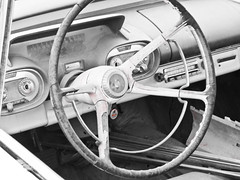
 and ask the vehicle what its problem is.
![Reblog this post [with Zemanta]](http://img.zemanta.com/reblog_b.png?x-id=3b6aa70f-c1d1-46a4-805e-9aacd623d1ac)
![Reblog this post [with Zemanta]](http://img.zemanta.com/reblog_b.png?x-id=7c3c71a0-6cde-4267-9317-a0c4b3cdaa72)

![Reblog this post [with Zemanta]](http://img.zemanta.com/reblog_e.png?x-id=a296da4e-aa79-4288-900d-4c77f3b8cfa0)

![Reblog this post [with Zemanta]](http://img.zemanta.com/reblog_e.png?x-id=2e9a6c02-58cb-466a-9258-ac33372c378e)
